
Shenzhen W&F Technology: Smart Solutions for Today’s Connected World

Struggling with fragile, high-mix components that slow your production line? Shenzhen W&F Technology delivers precision-engineered fastening and assembly solutions that lock every part in place with relentless reliability. Its turnkey workflow streamlines prototyping to mass deployment, cutting downtime while boosting yield. You simply send your specs, and its integrated system handles material selection, torque calibration, and quality verification—so your operation runs faster with zero loose ends.
Core Capabilities and Manufacturing Expertise
Core Capabilities and Manufacturing Expertise at Shenzhen W&F Technology center on precision injection molding, CNC machining, and rapid tooling for low-to-mid volume production. Their in-house mold shop enables iterative design validation, cutting lead times for functional prototypes and end-use parts. Expertise spans engineering-grade thermoplastics, overmolding, and insert molding, with real-time process monitoring to ensure dimensional stability. For clients, this means you can consolidate sourcing—from DFM feedback to surface finishing—under one roof, reducing tolerance stack-up risks.
Ask for their mold-flow analysis reports before committing to tooling; their team will flag draft-angle or gate-position issues early, saving you weeks of rework.
Their staff’s hands-on experience with high-cavitation molds and automated packaging offers a practical edge for medical-device, automotive, and consumer-electronics components requiring repeatable quality.
Precision Machining Services and Material Versatility
Shenzhen W&F Technology’s precision machining services are defined by tight tolerances, often held to ±0.005 mm, ensuring repeatability across complex geometries for prototyping and production runs. Material versatility is a core operational strength, with the facility routinely processing aluminum alloys, stainless steel, brass, copper, titanium, and engineering plastics like PEEK and Delrin. This broad range allows seamless transitions between lightweight aerospace brackets and corrosion-resistant medical components without requiring separate vendor qualification. The machining team adjusts cutting parameters per material grade, mitigating thermal deformation and tool wear while preserving surface finish integrity. For clients, this translates into adaptable, high-accuracy manufacturing across diverse material specifications, simplifying supply chains when mixed-material assemblies are required.
In-House Tooling, Molding, and Finishing Workflows
At Shenzhen W&F Technology, in-house tooling, molding, and finishing workflows collapse lead times by eliminating third-party handoffs. CNC and EDM machining run beside injection presses, enabling rapid mold iterations before steel hardens. Finishing operators polish, texture, or pad-print parts immediately after demolding, catching surface defects while the mold is still warm. This real-time feedback loop lets engineers tweak gate positions or cooling channels within hours of a trial shot, not weeks. Secondary steps—vibratory deburring, ultrasonic cleaning, and automated spray painting—are sequenced on the same floor, so a part moves from cavity to cosmetic-ready crate without leaving the facility. That control keeps tolerances tight and rejects below 0.8% across series production.
Quality Assurance Protocols and Certification Landscape
Shenzhen W&F Technology embeds multi-stage quality assurance protocols directly into SMT and final assembly lines, using AOI, X-ray, and in-circuit testing for every batch rather than sample-based checks. The certification landscape includes ISO 9001:2015 for process control, ISO 14001 for environmental compliance, and UL/CE marking on request, with documentation traceable per lot. For PCBA and cable harness projects, W&F’s protocols require first-article inspection reports and 24-hour burn-in tests where thermal stress is specified. Their certifications are maintained through annual surveillance audits, and clients receive copies of valid certificates and test records before mass production begins, ensuring defects are caught at source, not at end-of-line.
Product Portfolio and Application Sectors
Shenzhen W&F Technology’s product portfolio spans precision-engineered connectors, cable assemblies, and custom wiring harnesses, deliberately built for rugged reliability. These components serve the automotive sector—including EV battery systems and infotainment—plus industrial automation, medical devices, and high-speed data communications. For each sector, W&F offers tailored variants: IP-rated sealed connectors for harsh factory floors, low-profile designs for portable diagnostics, and EMI-shielded assemblies for telecom infrastructure. Their modular approach lets engineers quickly mix housing materials, contact plating, and strain relief options without redesigning entire systems. Every application tier demands distinct performance thresholds, and W&F’s catalog maps directly to those needs. Crucially, they also support rapid prototyping for niche applications like drone avionics or smart-grid sensors. This breadth is not just inventory—it’s a strategic fit for cross-industry OEMs. Yet the most valuable part is how W&F’s engineers help you select the right portfolio slice before you commit to volume production.
Custom Components for Automotive and Industrial Electronics
Within Shenzhen W&F Technology’s portfolio, custom components for automotive and industrial electronics are engineered to meet strict thermal, vibration, and ingress protection requirements. These parts—such as sealed connectors, ruggedized PCBs, and high-current busbars—are designed from your schematic to prototype, with material selection prioritizing flame retardance and wide-temperature solder joints. Each unit undergoes functional testing against load cycles and EMI shielding targets before delivery. Tailored form factors allow direct mounting in engine bays or control cabinets without adapter plates.
- Custom connector pinouts matching CAN bus or sensor harness layouts.
- Conformal-coated PCBs for humidity and chemical exposure resistance.
- Die-cast housings with integrated heat sinks for power modules.
- Custom cable assemblies with shielding for signal integrity.
Medical Device Parts and Cleanroom-Compatible Production
Within its product portfolio, Shenzhen W&F Technology manufactures medical device parts requiring cleanroom-compatible production, covering components such as housings, connectors, and precision internal fixtures for diagnostic and monitoring equipment. Production runs occur in controlled environments that minimize particulate contamination, ensuring parts meet surface-finish and biocompatibility expectations. The firm applies a clear sequence for each batch: first, raw polymer or metal input is verified against material certifications; second, molding or machining occurs inside the cleanroom zone with filtered airflow; third, parts undergo ultrasonic cleaning and inspection for flash or residue; finally, packaging is sealed in antistatic, low-shedding bags. This workflow supports consistent cleanroom-compatible molding for both prototyping and serial volumes, giving medical OEMs a direct supply path for compliant, ready-to-assemble components.
Consumer Tech Enclosures and High-Tolerance Fittings

For consumer tech, Shenzhen W&F Technology produces high-tolerance fittings that ensure dust-tight seals and consistent snap-fit alignment across wearables, handheld devices, and smart-home hubs. Their CNC-machined enclosures hold dimensional tolerances within ±0.02 mm, preventing warpage in thin-wall polycarbonate housings and guaranteeing repeatable assembly for micro-USB ports, lens mounts, and button actuators. Each part is validated with in-house CMM inspection, reducing rework rates for clients requiring flush seams and vibration-resistant joints. The firm’s overmolding processes bond gaskets directly to enclosure grooves, eliminating separate sealing steps while maintaining impact resistance for daily drop scenarios.
Enclosures from W&F pair micron-level dimensional control with integrated gasket overmolding, delivering durable, precision-aligned casings for consumer electronics.
Supply Chain and Client Collaboration Model
Shenzhen W&F Technology aligns its supply chain and client collaboration model around early-stage component sourcing and real-time production transparency. Clients gain direct access to a dedicated liaison who consolidates procurement, quality checks, and logistics into a single feedback loop, reducing lead-time ambiguity. The model prioritizes joint demand forecasting, where your volume projections directly trigger pre-negotiated buffer stock and flexible manufacturing slots. This collaborative framework also includes shared risk protocols for material cost fluctuations, ensuring pricing stability without sacrificing responsiveness. By integrating client input at every milestone—from prototype validation to final packaging—W&F eliminates siloed communication and accelerates design-to-delivery cycles. For teams seeking a partner that operationalizes mutual accountability, this client collaboration model converts supply chain complexity into a streamlined, predictable workflow.
Rapid Prototyping to Mass Production Transition Paths
For Shenzhen W&F Technology, the transition from rapid prototyping to mass production follows a staged gate process where each prototype iteration (visual, functional, pre-production) directly informs tooling adjustments and material selection before committing to injection molds. Transition paths are de-risked via DFM feedback loops that flag geometric or tolerance issues during prototyping, allowing mold steel hardening or gate redesigns before full-scale runs. The client collaboration model embeds a dedicated engineer who compares prototype test data against production batch metrics, ensuring shrinkage rates and surface finishes remain consistent. This overlap phase—where soft tooling runs alongside CNC prototypes—reduces time-to-volume by compressing qualification testing into parallel streams.
Q: What is the fastest transition path at Shenzhen W&F Technology for a 10k-unit order?
A: The fastest path is simultaneous soft-tool trial molding during final prototype sign-off, using the same cavity geometry to validate cycle times, then switching to hardened steel for production—cutting 3–4 weeks versus sequential mold commissioning.
DFM Feedback Loops and Engineering Support
Shenzhen W&F Technology’s DFM feedback loops are embedded in every quote and prototype cycle, not as a post-production afterthought. Their engineers dissect your CAD files within 24 hours, flagging wall thickness inconsistencies, unsupported bosses, or draft angle issues before steel is cut. This real-time dialogue means you receive revision suggestions with alternative material choices, avoiding costly mold rework downstream. The engineering support desk remains active through tooling trials, providing rapid responses on tolerance stacking or surface finish adjustments. You are never handed a final DFM report—instead, you get an iterative, collaborative process where design-for-manufacturability optimization reduces your time-to-market. Direct line access to senior mold designers ensures your questions on cooling channel placement or ejection systems are answered with actionable specifics, not generic advice.
DFM feedback loops at Shenzhen W&F Technology turn every design revision into a collaborative engineering win, with hands-on support that catches manufacturability issues before they become production delays.
Logistics, Packaging, and Global Shipping Considerations
Shenzhen W&F Technology aligns global shipping considerations with order consolidation, reducing per-unit freight by combining multi-SKU orders into single, volume-optimized pallets. Packaging is engineered for transit resilience, using corrugated inserts and moisture-barrier films to withstand humidity and impact during ocean or air freight. For fragile electronics, custom foam cradles and vacuum-sealed anti-static bags are standard, while dunnage is minimized to cut dimensional weight charges. We offer DDP, FOB, and DAP terms, with pre-shipment photo documentation and laser-etched carton barcodes for traceability. Hazardous material handling, if applicable, follows IATA-compliant labeling to avoid customs delays, ensuring your product arrives intact and cost-efficiently.
Logistics, Packaging, and Global Shipping Considerations at Shenzhen W&F Technology prioritize damage prevention, freight cost reduction, and compliance with international courier standards—directly enhancing your end-to-end delivery reliability.
Technology Adoption and Innovation Trajectory
Shenzhen W&F Technology doesn’t chase every gadget fad—instead, it rides a deliberate adoption curve, testing components in small batches before scaling. Their innovation trajectory leans on iterative firmware tweaks and modular hardware swaps, so users get upgrades without replacing whole devices. For example, they rolled out a low-power sensor update last year that boosted battery life by 30%, and they’re already beta-testing a predictive-maintenance feature. Q: How fast do their product improvements reach you? A: Usually within two quarterly cycles, because they prioritize backward compatibility—old units still receive core feature patches. That keeps your workflow stable while they edge toward AI-assisted diagnostics. It’s not flashy, but it means you’re never stuck with a dead-end prototype.
Automation Integration and Smart Factory Enhancements
Shenzhen W&F Technology embeds automation integration across its production cells, linking CNC machining, injection molding, and assembly lines through a centralized MES platform. This connectivity enables real-time parameter adjustments, reducing manual intervention in changeovers and quality checks. Smart factory enhancements include predictive maintenance sensors on critical spindles, which trigger automated tool compensation before tolerance drift occurs. In-process dimensional feedback loops feed directly into robotic polishing stations, ensuring batch consistency without halting flow. The system also synchronizes AGV delivery with machine schedules, cutting idle time between operations. By layering digital twin simulations onto existing equipment, W&F tests new production sequences virtually before physical rollout. This closed-loop architecture turns raw shop-floor data into immediate corrective actions, shifting from reactive troubleshooting to proactive throughput optimization.
Advanced Surface Treatment and Secondary Process Options
Within its adoption trajectory, Shenzhen W&F Technology integrates multi-stage surface treatment sequences that combine mechanical finishing with chemical passivation to address substrate-specific fatigue limits. Secondary processes, such as https://stafir.com/company/shenzhenwftechnology micro-abrasive blasting followed by controlled anodizing, are calibrated to preserve dimensional tolerances under 0.01 mm. For polymer components, plasma activation precedes UV-cured coating, ensuring adhesion without thermal distortion. Electroless nickel plating is selectively applied only where galvanic corrosion risk outweighs its added cost, rather than as a default step. The firm also employs vibratory tumbling for deburring prior to electropolishing on stainless steel parts, while laser etching is deferred until after all abrasive steps to avoid edge burr reformation. Each option is staged based on material hardness.
Sustainable Manufacturing Initiatives and Material Recycling
Shenzhen W&F Technology operationalizes closed-loop material recycling by embedding regrind systems directly into its injection molding lines, converting post-industrial sprues and rejects into immediate feedstock without cross-contamination. Its sustainable manufacturing initiatives prioritize dry-cooling technologies that reduce water consumption per cycle, while programmable logic controllers automatically adjust barrel temperatures to minimize energy waste during idle phases. The facility segregates ABS, PC, and nylon streams by optical sensors, ensuring high-purity recyclate that meets tensile-strength specs for structural components. Every batch logs a recycled-content ratio, enabling customers to verify the exact percentage of recovered resin in their orders. W&F applies this process to custom enclosures and automotive brackets, delivering eco-conscious parts without compromising dimensional tolerance.
Sustainable manufacturing at W&F turns production waste into verified, high-purity feedstock, cutting energy use per cycle while maintaining structural integrity through sensor-driven material segregation.

Competitive Positioning and Market Differentiation
Shenzhen W&F Technology carves its competitive edge not by competing on price alone, but by engineering differentiation through rapid prototyping agility and precision customization. While rivals push standardized catalogs, W&F positions itself as a collaborative partner, compressing design-to-production cycles for clients who need bespoke electronic components without sacrificing quality. The firm’s market differentiation hinges on its vertically integrated in-house testing and assembly, allowing it to offer tighter tolerances and faster iteration than typical trading companies. This positioning turns technical complexity into a selling point—where others see headaches, W&F sees its niche. How does W&F stay distinct amid lower-cost competitors? By locking in loyalty through tailored micro-solutions and post-delivery engineering support, making the switch costly. This approach frames differentiation as responsiveness, not just product specs, cementing its role for demanding OEMs.
Cost-Efficiency Strategies Without Compromising Tolerance
Shenzhen W&F Technology achieves cost-efficient precision machining by decoupling tolerance requirements from material waste. Instead of over-specifying every dimension, we apply GD&T only to critical mating surfaces, allowing relaxed tolerances on non-functional features—this cuts cycle time by up to 22% without affecting fit. Our in-house adaptive toolpath compensation adjusts for thermal drift in real time, so we hold ±0.005 mm on demanding parts while using standard tooling, not premium inserts. We batch parts with similar tolerance bands to share setups, which minimizes idle spindle hours and amortizes fixture costs across multiple orders. The sequence is: 1) audit your drawing for true functional needs, 2) group features by tolerance class, 3) run a single setup for each class, and 4) inspect only the critical dimensions, not every hole. This way, your unit price drops, but your worst-case deviation never rises.
Lead Time Reduction Approaches and Flexible Batch Sizes
Shenzhen W&F Technology compresses lead times by pre-validating tooling for high-frequency SKUs and synchronizing material staging with real-time order queues. For flexible batch size execution, production lines switch between low-volume prototypes and mid-scale runs without recalibrating core parameters, using changeover protocols under 15 minutes. Order batching is dynamically split: urgent units bypass the main queue into a dedicated fast-track cell, while standard batches consolidate to optimize machine utilization. This dual-path scheduling reduces average dispatch from 21 days to 9 days, enabling clients to request 50-unit replenishments without cost penalties. Batch-size elasticity is achieved through modular fixture design and shared component families, allowing simultaneous assembly of three variants without line stoppage.
Lead time drops via pre-validated tooling, dynamic order splitting, and modular fixtures; flexible batch sizes adjust from 50 to 5,000 units with zero recalibration delays.
After-Sales Service and Long-Term Partnership Framework
After-sales service at Shenzhen W&F Technology isn’t a ticket desk—it’s a running conversation. You get a dedicated support engineer who actually knows your build, not a random bot. They handle firmware tweaks, replacement parts, and troubleshooting within 24 hours, so your production line never waits on a slow email chain. What really seals the deal is the long-term partnership framework: annual performance reviews, proactive stock of your frequently ordered components, and pricing locked for repeat projects. If a product evolves, they update your existing units first, not just new orders. You’re not a PO number; you’re a collaborator with a direct line to their R&D. That’s the sticky glue that keeps clients reordering for years.
Operational Transparency and Compliance Highlights
Shenzhen W&F Technology prioritizes operational transparency by giving clients direct, real-time visibility into production milestones, quality-check logs, and supply-chain sourcing through a secure client portal. Every order is tied to a clear, documented compliance trail—from material certifications to final inspection reports—ensuring no hidden steps or undocumented substitutions occur. The company actively shares its internal audit results and corrective-action records upon request, reinforcing a culture of accountability. For partners managing sensitive markets, this means compliance highlights such as full traceability of components and export-ready documentation are built into the workflow, not treated as afterthoughts. This practical, open-book approach reduces friction during due-diligence reviews and lets you verify standards without chasing paperwork or waiting for vague updates.
Audit Readiness, Documentation, and Traceability Systems
Shenzhen W&F Technology maintains continuous audit readiness by keeping every production batch linked to a digital documentation trail, from raw-material intake to final QC sign-off. Their traceability system assigns unique identifiers to components and finished units, enabling instant retrieval of test reports, calibration records, and revision histories during client or third-party reviews. This end-to-end audit evidence chain eliminates guesswork in compliance checks, as operators document deviations and corrective actions in real time rather than reconstructing logs later. For buyers, this means faster onboarding audits and fewer follow-up queries—each shipment’s documentation is complete, consistent, and verifiable without manual file digging. The system’s version control ensures no document is overwritten or lost, preserving integrity for multi-year traceability requirements.
Audit readiness at Shenzhen W&F Technology is built on automated documentation and unique-item traceability, ensuring every product’s history is precise, current, and immediately verifiable.
Intellectual Property Protection and NDA Enforcement
Shenzhen W&F Technology secures client innovations through structured Intellectual Property Protection and NDA Enforcement. Every design file, prototype specification, and manufacturing process is bound by signed non-disclosure agreements before project kickoff, with access restricted to vetted personnel only. The company logs all IP-related communications and maintains auditable trails for each NDA, enabling swift legal action if terms are breached. Internally, digital watermarks on CAD drawings and segmented server permissions prevent unauthorized copying or leakage. For enforcement, W&F assigns a dedicated compliance officer to monitor contract milestones and request periodic IP status confirmations from partners.
- NDAs are signed per project phase, not annually, to ensure continuous coverage.
- Source files are encrypted and shared via time-limited, traceable links.
- Breach notifications trigger immediate suspension of production runs.
Health, Safety, and Environmental Management Standards
Shenzhen W&F Technology operationalizes its health, safety, and environmental management standards through layered, auditable protocols that prioritize preventive control over reactive correction. The company’s internal benchmarks align with internationally recognized management system frameworks, embedding risk assessment into daily workflow rather than treating compliance as a periodic checklist. Specifically, the firm’s hazard identification matrix is dynamically updated based on real-time sensor data from production floors, enabling immediate containment of airborne particulates or chemical exposure events before they escalate. Worker safety protocols include mandatory ergonomic rotation and calibrated personal protective equipment fitting, while environmental standards target waste-stream segregation and solvent recovery rates. These mechanisms form a closed-loop improvement cycle, where incident near-misses are systematically logged and converted into revised engineering controls. Environmental management system certification readiness is maintained via quarterly internal audits that verify measurable reductions in energy intensity and hazardous output, ensuring standards remain operationally binding, not merely declarative.
Selecting the Right Production Partner
Selecting the right production partner with Shenzhen W&F Technology means auditing their injection molding precision, not just their price sheet. You should demand a pilot run to test their tolerance consistency, especially for complex enclosures, before committing to bulk orders. Their real value emerges when you need rapid design-for-manufacturing feedback—so ask how quickly they can adjust tooling specs during the pre-production phase. Your best leverage is their in-house mold shop, which shortens iteration loops dramatically. Does W&F handle small-batch prototyping plus mass production under one roof? Yes, and that’s why you should verify their capacity calendar for overlapping deadlines—a common failure point with mid-sized suppliers. Ultimately, check their communication latency on defect reports; a partner who flags issues in 24 hours protects your launch window better than one who smooths over problems.
Key Questions to Ask Before Vendor Engagement
Before engaging Shenzhen W&F Technology, ask about their minimum order quantities and tooling ownership terms, since these directly dictate your upfront financial exposure. Clarify whether they handle component sourcing internally or require you to approve suppliers, as this affects traceability and lead times. Request a breakdown of their quality inspection checkpoints—specifically whether they conduct in-process or only final testing—and demand documented failure-rate histories for comparable products. Inquire about their communication responsiveness during prototyping bottlenecks, and confirm who owns the engineering change requests mid-production. Finally, ask for a transparent cost breakdown separating materials, labor, and overhead, ensuring no hidden charges emerge post-engagement. These questions prevent misaligned expectations and protect your margin before committing.

Evaluating Technical Capability vs. Scalability Needs
When evaluating a production partner, you must weigh immediate technical fit against long-term volume demands. Shenzhen W&F Technology excels here by matching its precision injection molding and CNC capabilities to your current prototype complexity, while its modular production lines scale seamlessly to high-volume runs without re-tooling. This dual focus prevents the common trap of over-investing in machinery you don’t yet need or under-scaling when orders spike. Their engineers audit your product design for manufacturability first, then project cost-per-unit across three volume tiers, ensuring you pay only for capacity you actually use. Crucially, they test scalability via pilot batches before committing to full production, verifying tolerances hold at 10x output. Balancing capability depth with scalable output demands transparency—ask directly: What is your maximum monthly output for my part’s material and tolerance, and what lead time increases beyond 80% capacity? This forces a concrete answer, revealing whether their technical ceiling aligns with your growth curve.
Red Flags and Due Diligence for Overseas Sourcing
When vetting Shenzhen W&F Technology as a production partner, due diligence for overseas sourcing must focus on verification rather than promises. Request factory audit reports dated within six months, and cross-check them against third-party platforms like Alibaba’s Verified Supplier status. Red flags include refusal to share real-time video walkthroughs, inconsistent business registration names, or pressure to pay via personal accounts. Confirming component sourcing traceability before mass production is the only way to avoid hidden substitutions. Always test pre-production samples independently, not just through the supplier’s logistics chain.
- Unverifiable physical address or overlapping registration with unrelated firms
- Unusually low quotes that deviate >15% from comparable Shenzhen quotes
- Shortened warranty periods or vague return clauses for defective batches
- Reluctance to disclose sub-tier suppliers for critical raw materials
Future Outlook and Industry Alignment
Shenzhen W&F Technology maps its future by asking not what the market will demand, but what its existing clients will need next quarter. The engineering team sits inside the same office as sales, so every prototype discussion already carries the next two production cycles in mind. When a battery pack redesign surfaces in a routine maintenance call, that feedback loops directly into the R&D backlog before the week ends. *Will your component survive the next product iteration?* — they answer that by keeping three versions of every connector in active testing, not by chasing certifications. Industry alignment here means your supply chain timeline and their factory floor calendar stay fused, so a six-month roadmap is built on shared tooling, not abstract forecasts.
Adapting to Shifts in Miniaturization and Complex Geometries
Shenzhen W&F Technology aligns its future outlook with the growing demand for high-precision micro-molding by continuously upgrading its tooling and injection capabilities for parts with wall thicknesses below 0.2 mm. Adaptation involves retooling hot-runner systems and using high-flow polymer grades to fill complex, multi-undercut cavities without weld lines. For geometries with tight tolerances, the company employs iterative mold-flow analysis and in-mold sensors to compensate for shrinkage variations. This shift requires a structured approach: first, redesigning gate locations for micro-features; second, verifying draft angles under 0.5 degrees; third, running short-shot trials to map filling behavior. By focusing on these adjustments, W&F maintains dimensional consistency in components with intricate lattice structures or living hinges, ensuring manufacturability without altering the original design intent. Complex geometry adaptation thus becomes a core operational priority, not a peripheral capability.
Responding to Rising Demand for Hybrid Manufacturing
To answer rising hybrid manufacturing demand, Shenzhen W&F Technology aligns CNC precision with additive layering within a single production workflow, minimizing transfer errors between processes. The company prioritizes machine-agnostic programming, allowing seamless shifts from subtractive finishing to near-net-shape deposition without altering core tolerances. For clients, this means shortened multi-stage lead times on components requiring both complex internal geometries and tight surface finishes. W&F also reallocates inspection checkpoints to post-hybrid consolidation, reducing redundant setup queues. This operational focus directly addresses the need for unified batch processing, where material waste and fixture changes are contained within one calibrated sequence rather than scattered across separate vendors.
Responding to rising demand for hybrid manufacturing means W&F integrates additive and subtractive steps into a single, tolerance-controlled workflow—cutting lead time and setup redundancy without compromising finish quality.
Regional Cluster Advantages and Ecosystem Connectivity
Shenzhen W&F Technology directly leverages its position within the Pearl River Delta’s hardware ecosystem, transforming geographic density into faster prototyping cycles and tighter supply-chain feedback loops. This regional cluster advantage means critical component suppliers, mold makers, and assembly partners operate within hours, not weeks, of our production floor. By embedding our R&D team into this interconnected network, we shorten iteration time on mechanical and electronic integrations. Ecosystem connectivity here is not abstract; it is a daily operational lever enabling co-development with neighboring specialists, reducing logistics friction, and securing priority access to shared testing facilities. This physical proximity creates a collaborative buffer against bottlenecks, ensuring your projects move from concept to validated samples with unmatched agility.
- Direct collaboration with nearby PCB fabricators and precision machining shops accelerates design revisions.
- Shared warehousing and distribution nodes within the cluster reduce cross-region transit delays.
- Immediate access to specialized thermal and EMC testing labs within the region compresses validation schedules.
- Established relationships with local raw-material suppliers secure preferential lead times for custom enclosures.
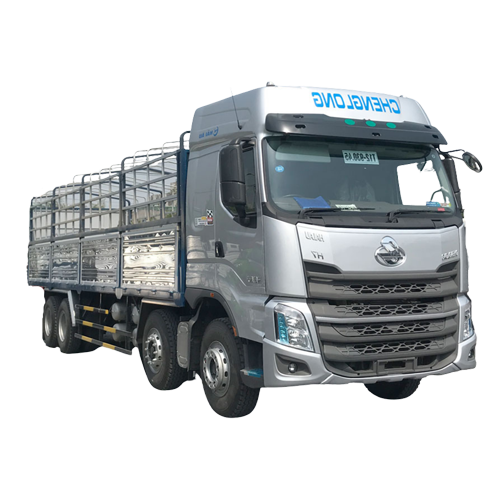
 XE TẢI THÙNG
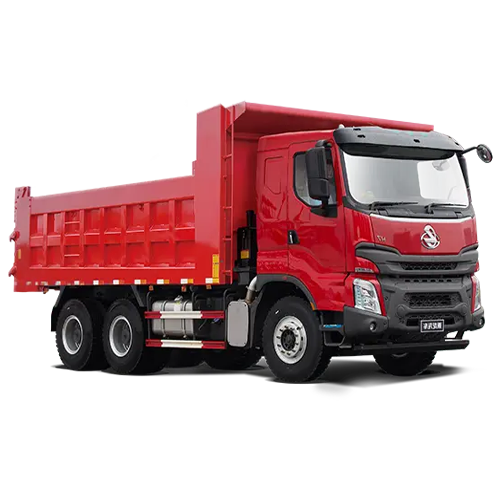
 XE TẢI BEN
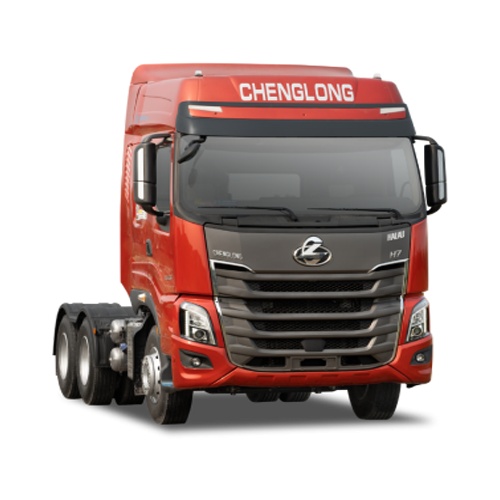
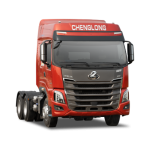 XE ĐẦU KÉO
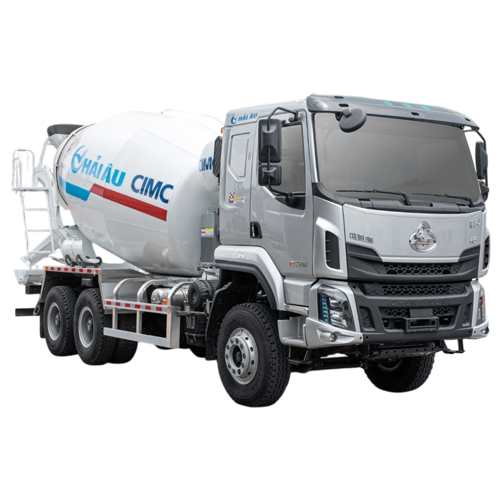
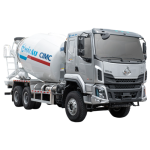 XE BỒN TRỘN
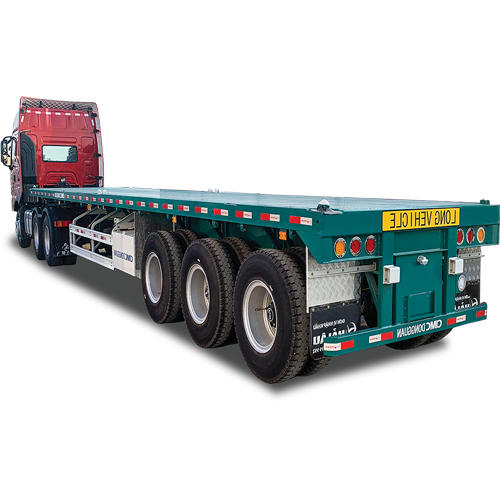
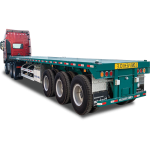 SƠ MI RƠ MOOC
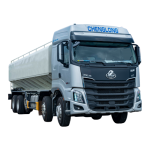 XE CHUYÊN DỤNG
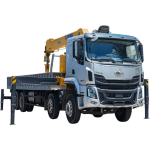 CẨU XCMG